Lloyd Blankfein Agrees with T. Carlos!


lloyd.3
Lloyd Blankfein

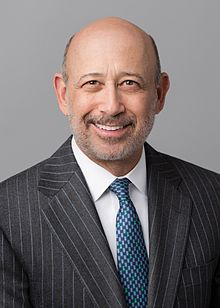
Lloyd Blankfein, CEO of Goldman Sachs, agrees with me: American society has done a much better job creating wealth than distributing it.  This current era of excess, circa 1980, with its emphasis favoring a top-heavy economy, isn’t getting the job done. In a February 12th interview with CNN’s Poppy Harlow, Blankfein said income inequality is “destabilizing” American society and that “we all need to get together to work on the problem.”

Blankfein has humble roots. Born in the South Bronx in 1954, he grew up in Brooklyn. His family lived in the Linden Houses, a public housing settlement predominantly, at that time, inhabited by Jewish families. Blankfein’s father worked the night shift at the post office, and his mother worked as a receptionist at a local burglar-alarm company. Young Lloyd attended Hebrew school at nearby B’nai Israel, and had his first job (at thirteen) working Yankee Stadium selling sodas as a vendor in the upper deck.

Class valedictorian at Thomas Jefferson High School in 1971, he moved onto Harvard and garnered a law degree in 1978. He joined Goldman in 1981. He became Goldman’s CEO in 2006.

Blankfein has had a few moments of infamy as Goldman CEO. In testimony to a Senate subcommittee in 2010, he claimed Goldman Sachs had “no moral obligation” to inform clients that Goldman was actually taking leveraged positions against the financial products they were selling. I doubt that Blankfein learned that rationale when he was in Hebrew school.

In 2009, Blankfein gave The Times of London a far-reaching interview. The most memorable line of the interview, however, was an off-hand comment that Blankfein later retracted, saying he was only joking. He described himself as a banker “doing God’s work.” The line buttressed his previous comments in the interview concerning the social purpose of the high-end banking industry. It reminded me when Ivan Boesky threw in the comment, deviating from his prepared notes at a 1986 graduation ceremony at UC-Berkeley, that “greed is good.” Boesky meant it and didn’t retract it even as he spent time in jail because of his greedy behavior – and there’s no question that Blankfein meant what he said about his vocation having divine implications, even if he did say it with a bit of bravado and irony. Earlier in the same interview, Blankfein conceded that “he could slit his wrists, and people would cheer.” Bravado, irony, and self-awareness.

The creation of wealth and the accompanying opportunity for credit are categorically God’s work. Common folks, like Blankfein’s parents, do not provide for their children and “climb the ladder” simply by working hard. They need credit – credit that is fair, manageable, and available. That’s what banks do. Lloyd is right. Thank God for banks.

Yet there’s more to the God-talk when we broach the topic of wealth creation – we also must consider wealth distribution. Ah, good ol’ wealth distribution and redistribution. Now it’s getting interesting!

After Blankfein’s theological statement in 2009, he’s obviously had a lunch meeting or two with his rabbi and reviewed some previous Hebrew school teachings. He’s been on record since 2011 criticizing American wealth distribution. He defended his comments further in 2012 saying while he wasn’t “a socialist,” he understood that social unrest in the US (Occupy Wall Street) was related to the poor distribution of wealth in “the last generation or two.”

The Hebrew Bible is adamant that the well-off in society have a responsibility toward the poor. Ancient Israel, of course, was a theocratic monarchy, whereas the United States is a democratic republic. All the same, from their related faith systems, Jews and Christians share a common understanding: All good things come not only from the Creator God, but all things are rightly God’s property. “The earth is the Lord’s, and everything in it” (Psalm 24:1). Our proper use of the goods in and of the earth – from wealth and possessions to talents and abilities – is faithful stewardship. And, yes, there are those in God’s green earth that take advantage of good stewards and their good intentions; even more so, the challenge to share the wealth of the earth calls for our very best efforts and strategies.
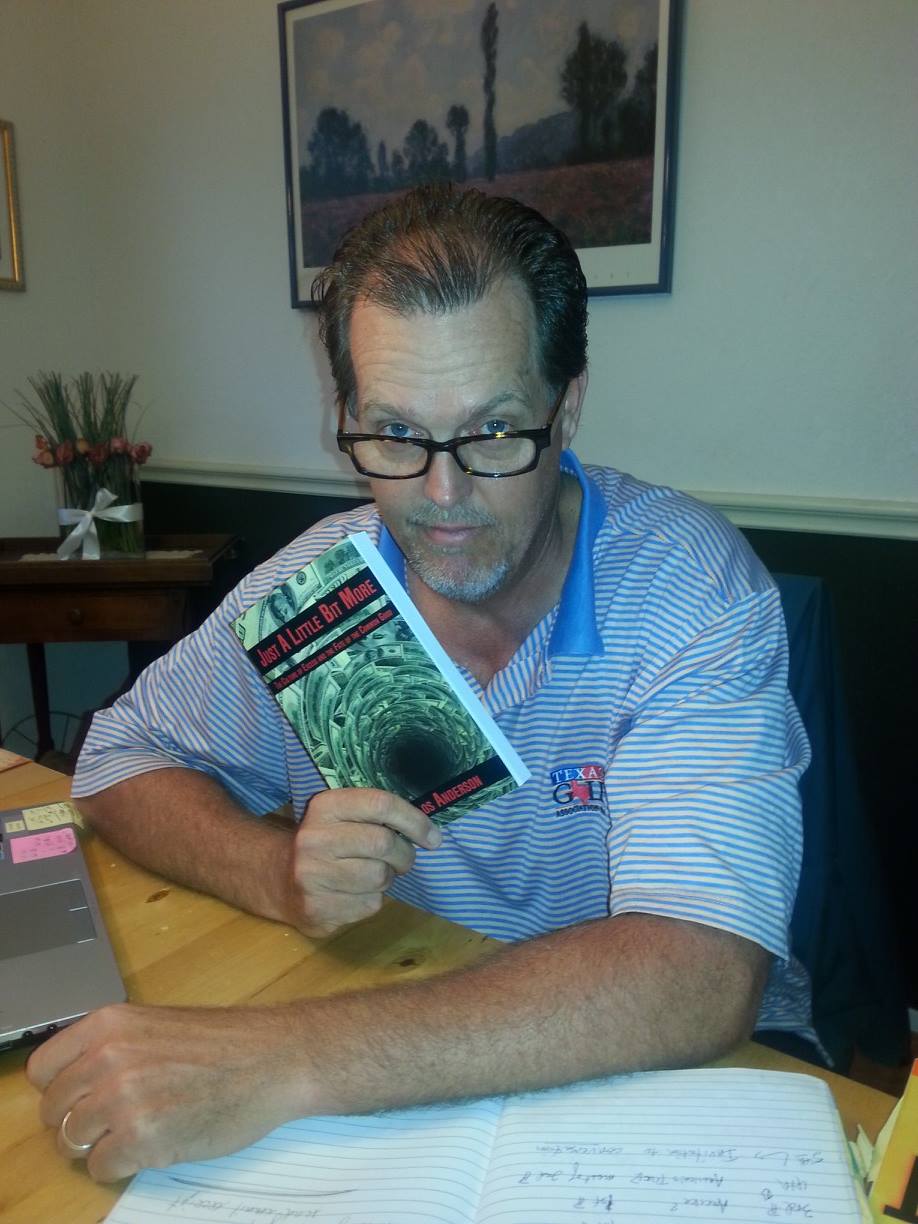
ta book
T. Carlos

In my book, Just a Little Bit More: The Culture of Excess and the Fate of the Common Good, I detail the traditional religions’ claim against greed as a destructive agent upon individuals and communities. Judaism relates greed to “the violence of the rich” and Buddhism warns of the toxic nature of the “hungry ghost.” I also focus on the social problems that fester in a financially and economically unbalanced society, as we’ve seen in the last generation or two in the United States.

And this is where Lloyd and I part ways. I stand with him for better distribution of wealth, but it will only happen once the folks at the very top are disengaged from their conviction – as if a religiously held belief – that the uninhibited pursuit of wealth is a social value worth living by and teaching our children.


Just a Little Bit More is available through the website of Blue Ocotillo Publishing, www.blueocotillo.com, and Amazon. Blue Ocotillo Publishing – paperback – $14.95 + tax (for Texas residents) + shipping. Ebook format available on Amazon, iBooks, and Nook.

“A Reasonable, Balanced, and Authoritative Public Word”

PhilRugePHOTO
Professor Phil Ruge-Jones in action at TLU

Phil Ruge-Jones is a pretty bright guy. That’s not hyperbole; you can ask anyone who knows him or knows of his work. ELCA pastor, bearer of a Ph.D. in systematic theology, and professor of theology and philosophy at Texas Lutheran University in Seguin, Texas, Phil is also bilingual en el bendito Español. For close to twenty years, he and his spouse, ELCA pastor Lori Ruge-Jones, have been leaders in the biblical storytelling movement. As a matter of fact, Phil recently recited the gospel of Mark – in two one-hour sessions – for the theological conference gathering of the three Texas/Louisiana synods of the ELCA.

Phil recently took some time to digest Just a Little Bit More: The Culture of Excess and the Fate of the Common Good. Here’s what he has to say:

     “Anderson’s book is an extensive chronicling of the people, movements, and streams of thought that have led us on the quest to want just a little bit more. In the role of a theologically aware social critic, he reminds me of Niebuhr. He is deeply embedded in the Christian tradition, but has listened carefully to many other voices and thus speaks a reasonable, balanced, and authoritative public word. Anderson shows us the way back to the North American commitment to egalitarianism that has become lost over the last century.”

Just a Little Bit More describes the dominant American culture of the last thirty-five years – the confluence of commerce, materialism, consumerism – as a religion. It’s been a good religion that has clothed, fed, employed, and sheltered us. But it has a tendency to go too far and when the aforementioned pursuits become excessive, the religion breaks bad and the common good suffers.

Available as a paperback or ebook, Just a Little Bit More is an excellent resource for personal reflection and/or group discussion. Is social inequality the necessary price to pay for the uninhibited pursuit of wealth? Do social inequalities destroy democratic ideals? Is there a connection between the common good and God’s realm or kingdom? These questions, and others, await you in the reading of Just a Little Bit More.

Just a Little Bit More is available through the website of Blue Ocotillo Publishing, www.blueocotillo.com, and Amazon. Blue Ocotillo Publishing – paperback – $14.95 + tax (for Texas residents) + shipping. Ebook format available on Amazon, iBooks, and Nook.
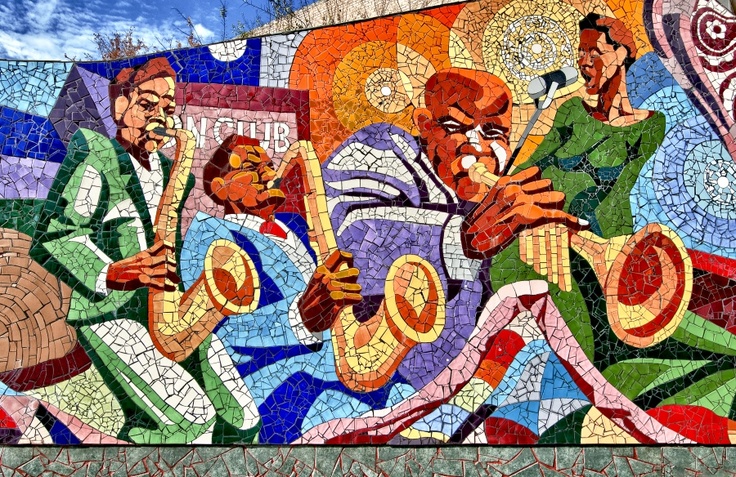
Austin is #1! . . . in Economic Segregation

john yancey
University of Texas professor John Yancey’s depiction – broken tile mosaic – of old East Austin, “Rhapsody,” located just east of I-35 in downtown Austin.

Austin, Texas – self-proclaimed live music capital of the world, home of the Longhorns and SXSW – is the most economically segregated large metro area in the United States, according to a new report from the Martin Prosperity Institute. Three other Texas cities/metro areas joined Austin in the top ten ranking: San Antonio, Houston, and Dallas-Fort Worth. Economic segregation means someone at or below the poverty line doesn’t live in the vicinity of someone making $200,000/yr. or more. These two persons might live in the same city, but they live miles apart, literally and figuratively. Austin is #1 – the wealthy increasingly wall themselves off from their poorer city-mates, making for a hard-set segregation of economic classes, not unlike the racial segregation of generations past.

As a matter of fact, Austin’s economic segregation is distinctly based upon the racial divisions of years past. Interstate 35 – running from Laredo to Duluth – splits Austin right down its middle. Generally, the west side is mostly white and well-off and the east side is not. In the 1880s, Austin had a reputation for being a refuge city for freed slaves – a rarity for the South. At this time, African-Americans lived in various geographic pockets all over town. In 1928, Austin created “Negro districts” (in part, ostensibly) to facilitate access to city parks and schools for African-Americans. Austin’s African-American population at this time was just under 20 percent of its total. The 1920s, like the current era, was a time of economic segregation when the gap between America’s wealthiest and poorest increased significantly. During the Depression, the Home Owners’ Loan Corporation, a New Deal-inspired agency created to help struggling homeowners with mortgages, sanctioned the infamous red-lined districts of many American cities, essentially quarantining “the threat of infiltration of foreign-born, negro, or lower grade population” from more desirable parts of cities. By the 1940s, Austin was racially segregated with blacks and Hispanics living east of downtown. The 1962 completed construction of I-35, walling off the east side toward the west with a 100-foot wide concrete canyon, sealed the deal.

Austin has the distinction of being the only city in the country with double-digit population growth in the first decade of the 2000s to experience a decrease in African-American population. Gentrification happens, yes; but it’s deeply ironic that many of Austin’s black residents are now being forced out of an area of town that their ancestors were forced into. Furthermore, Austin maintains its “#1 ranking” of economic segregation even as some of its economically disadvantaged residents leave to live beyond its city limits. African-American population in the United States has been stable for years at 12 percent; additionally, 3 percent of Americans self-identify as bi- or multi-racial (President Obama, Tiger Woods, Beyoncé Knowles). Austin’s black population is now only 8 percent of its total (70,000 of 885,000).

What’s the rub? Extreme economic segregation, just like racial segregation, denigrates the overall health and well-being of a community. This blog consistently trumpets two related and unfortunate current realities of American life: the cultural and geographic clustering of folks in the same socio-economic class, and the disconnect between those who are well-off economically and those who are not.

In the months since my book Just a Little Bit More: The Culture of Excess and the Fate of the Common Good has been published, I’ve had many good conversations with individuals and groups on important topics such as poverty, economic inequality, and social mobility – all covered in JaLBM. I frequently ask fellow well-off Americans the following: Do you actually know anyone who lives in poverty? Oftentimes, the honest answer is “no.” There’s a lot of partisan bickering in today’s America about the social problems – many related to poverty – that confront us. What’s not easy in today’s America is to actually have a relationship on equal terms with someone in a different socio-economic class. And because of that, our society consists of many who, lacking insight into another’s plight, are quick to judge the others that they simply don’t know. Just read (for as long as you can take it) the “Comments” portion on articles of newspaper websites dealing with the above mentioned topics.

Working together for a shared common good is a hard task. It takes a commitment to making relationships (especially with those who are “different”), compassion, and smarts. It also understands that present and future realities are related to past ones. Austin’s childhood poverty rate is close to 30 percent – not good. It’s over 50 percent for African-American and Latino children – even worse. “Their” problem? Not a chance – it’s a community issue that needs communal response, resolve, and interaction from those who live in Rosewood Courts to those residing on the thirty-first floor (from where one can see into East Austin) of the new and swanky high rise, The 555.


Click here for link describing in detail John Yancey’s strong and beautiful mosaic “Rhapsody.”

The Story Behind the Pen Name!!

T. Carlos Anderson?! Really? The author of Just a Little Bit More is someone named T. Carlos?! Everyone, including family and good friends, knows me as Tim. Well, let me explain . . .

ta book
Tim or T. Carlos Anderson??

When I was in high school, there was another student, a year younger than me, named Tim Anderson. My fellow Tim was a decent guy, a bit shorter than me. I played basketball and he played baseball, so our paths were mostly separate. When I was in seminary, there was a fellow student, a year or two older, named Tim Anderson. In the seminary student directory, spouse names were included parenthetically after the student names. One year the Tim Anderson wives were switched, an innocuous type of paper wife-swapping at the theological institution.

Now, years later, in the process of writing Just a Little Bit More, I spent some time studying Amazon.com author pages. Guess how many Tim Andersons are selling books on Amazon? At least seven sprinkled here and there between the sixteen pages that come up under an author name search. My middle name is Carl – my dad’s name. T.C. Anderson has a nice ring to it . . . sorry, already taken.

In the late 1980s, we lived in Peru for two years. There my (true) wife Denise and I learned el Espanol. I was there as a seminary intern, practicing the pastoral arts albeit in the foreign language that I consistently graded out with C’s during high school (because I couldn’t have cared less about it – but that’s a different story for another day, pues). My North American colleagues assured me when we arrived that the name Timoteo would serve me well during our South American stay. Timoteo was biblical and it had a lyrical ring to it. One day after having logged a year or so in the land of los Incas, a taxi driver and I struck up a conversation in his cab. I loved learning Spanish by conversing – a daily challenge, like a fun verbal word puzzle, no homework to scribble out. We got on well and after awhile he asked my name. When he heard me say Timoteo, he laughed. Hombre, aqui en el Peru el nombre Timoteo es un nombre para gatos y perros. “Hey buddy, here in Peru the name Timoteo is a name we use for cats and dogs.” From that moment on, I went by a new name – my middle name in Spanish form – Carlos.

So there you have it. T. Carlos Anderson isn’t a complete fabrication. The honesty of that taxi driver saved me, during my last year in Peru, from a bit of cultural verguenza – a combination of shame and embarrassment. And, unknowingly, he gave the future author a working pen name and a memorable story to share. Just a Little Bit More is now available as an ebook on Amazon.com, and I’m the only author you’ll find there named T. Carlos Anderson! For those of you gifted with a unique name – not used for pets – I’m pleased to be welcomed to your world.


The second edition paperback version of Just a Little Bit More: The Culture of Excess and the Fate of the Common Good is available through www.blueocotillo.com., ACTA Publications, Chicago, IL, and through the Amazon, iTunes, and Nook websites.

Blue Ruts and Red Ruts

My wife and I took in Richard Linklater’s Boyhood last year when it came out. Encompassing twelve years of filming, Boyhood gently breaks new ground as viewers watch its characters grow, develop, and age. In one of the opening scenes, siblings Sam (played by Linklater’s real-life daughter Lorelei) and Mason (played by Austinite Ellar Coltrane) seek out their mother’s attention via a good old-fashioned sibling yelling fight. “Mom! Tell her to quit it!” What younger brother wouldn’t yell for his mom to tell his older sister to be quiet when she annoyingly sings and dances out Britney Spears’s Oops! . . . I Did It Again in his face?

brothers2
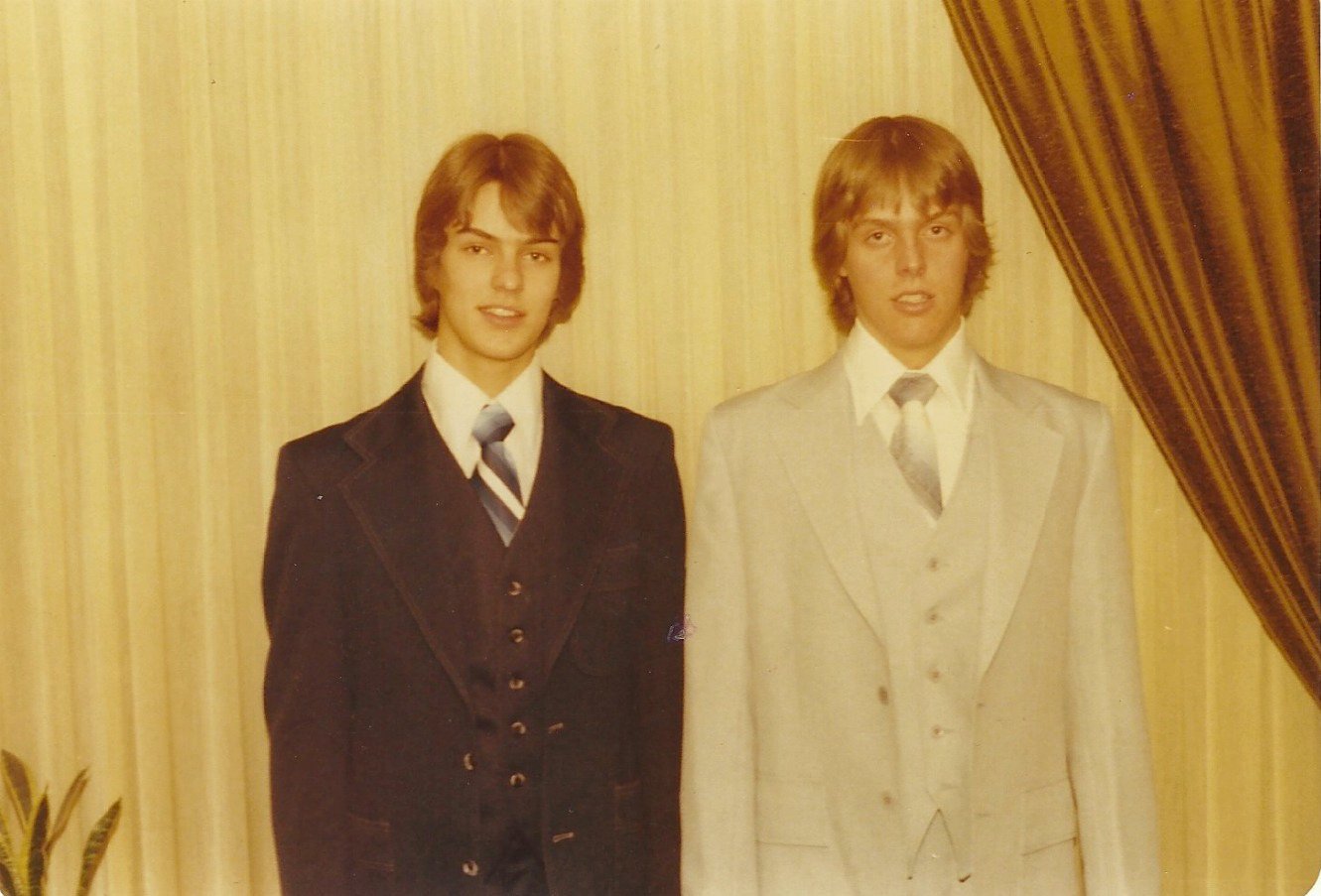
Mark and Tim (circa 1980)

My brother and I used to pull crap like that all the time; not mugging Brittany, but slamming an imaginary Mike Nesmith axe in the other one’s face, among other pranks. Only 13 months and mere weeks apart, my brother Mark and I used to go at it competitively and contentiously. It’s a miracle we didn’t drive our poor mother out of her mind. (Although, back in the day when embarking on a trip of any sort our mom would instinctively answer our constant query of Where are we going? with the stock reply of Crazy.) But something happened as my brother and I hit our teenage years and headed off to college: we realized we were on the same team. Brothers – family – yes, teammates.

Witnessing the political behavior that emanates from Washington DC (and from other capitols across the country) is akin to watching small children – siblings, no less – fight and argue, kick and scream, and without fail, blame the other. Of course, it’s always been this way and this is how democracy works. Partly true, but things are markedly worse now than they’ve been for a long time. How nostalgic to remember President Ronald Reagan (Republican red) and House Speaker Tip O’Neill (Democratic blue) in action: they agreed that before 6:00 p.m. it was all politics, and after that designated hour they were to be on cordial behavior. Reagan even threw a seventieth birthday party for O’Neill at the White House. They saw themselves as adversaries, and not mortal enemies. Today’s political hyper-partisanship traces back to Newt Gingrich’s strategy as the Republicans, in 1994, took majority control of the House of Representatives for the first time in forty years. It was a brilliant strategy that brought an end to an entrenched status quo: Destroy the institution to save it – throw the majority bums out. But, unfortunately, that same strategy has been the modus operandi for both dominant political parties ever since, producing ample gridlock which helps maintain the status quo. Thomas Mann and Norman Ornstein in their book It’s Even Worse Than It Looks (Basic Books, 2012) argue that political polarization is at an all-time high in American society. And that’s going some 150 years back to the time of Reconstruction.

Blue ruts and red ruts. Not only our politicians, but many citizens are stuck in what I call blue and red ruts. Many people are stuck in place not moving forward, like a spinning car wheel stuck in a rut, not able to perform its task of moving the car forward, but only digging the rut deeper and deeper. Many citizens, of course, align themselves with one of the two major political parties. We all have our preferences and heartfelt convictions. But to be hyper-partisan to the point where one side feels as if the other side has no legitimate ideas or input? If you are a committed Democrat, do you truly feel the country would be better off if everyone was a Democrat? And putting the shoe on the other foot, would we be better off if we all were Republicans – every single one of us? How many of us – aligned with one of the dominant political parties – actually have adult conversations (without temper tantrums or name calling) on important societal topics with a friend or acquaintance aligned with the opposing political party? Think about the possibilities for positive change in our society if we turned off Fox News and MSNBC and actually conversed one with another in a civil manner . . . and then acted upon our convictions in public service to benefit the common good.

Diversity – different parts working together, carrying out specific tasks – moves us forward. As Rabbi Jonathan Sacks claims in his book Future Tense (Shocken, 2009), ideology is “the attempt to impose a single truth on a plural world.” Partisans want to have their way; that’s normal. But they also realize in a big world it’s good to get along with others, share, and not pout (too often). Hyper-partisans, on the other hand, like siblings who can only fight and whine, don’t get along with those who are “different” and certainly don’t want to share or cooperate. That’s not how families or democratic societies function at their best. Getting stuck in a rut – no matter the color – that’s not much good for anyone.

It’s much better to live out and recover the democratic understanding of politics as the art of the possible. Impossible? Time to call out (and vote out when possible) the hyper-partisans who act more like children than adults.

brothers
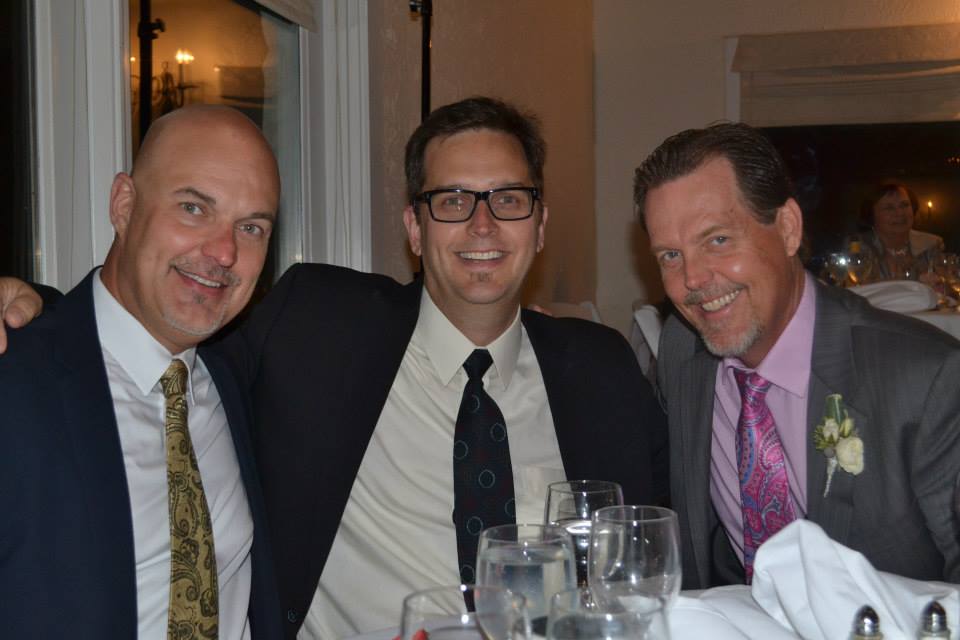
Brothers Mark, Matt, and T. Carlos


If you like what is written in this blog post, you’ll like what I have to say in Just a Little Bit More: The Culture of Excess and the Fate of the Common Good (Blue Ocotillo Publishing, 2014). It’s available at this link, and at other venues where books and ebooks are sold.

America’s True Religion

(It’s been a year since Cadillac – spot on – defined America’s dominant religion. Let’s revisit this classic.)

The Cadillac commercial many saw during the February 2014 Winter Olympic Games coverage precisely embodies America’s true religion: the confluence of commerce, materialism, and consumerism. Check it out below.

Theologian Paul Tillich broadened the definition of religion when he described it as “ultimate concern.” The actor in the commercial, Neal McDonough, strikingly articulates America’s dominant religion step-by-step. “We’re crazy, driven, hard-working believers.” And then he tells us what we believe in, while striding aside the $75,000 four-wheeled object of adulation: “It’s pretty simple. You work hard, you create own luck, and you gotta believe anything is possible.”

Don’t get me wrong – on the surface, commerce/materialism/consumerism is not a bad religion, or ultimate concern. It’s fed, clothed, housed, employed, and provided for millions of Americans (and many others) and served the common good for a number of generations. Work, a vital component of the religion, enables our survival at the most basic level. But when it goes to excess – hours worked, inordinate material and consumerist pursuits – the religion becomes idolatrous. McDonough’s character becomes a type of high priest enticing us to a counterfeit promised land found via “just a little bit more.” Americans began to work more and more hours in the late 1970s, reversing a long-standing trend of declining number of hours worked. Whereas America has been historically associated with the opportunity to work, the country now seems to be associated with the domination of work (for those who can find it).

We do work hard (only South Koreans and Australians work more hours than Americans), but the American economic mobility that used to be the benchmark for the rest of the world has significantly eroded away. The philosophy of work hard and advance applies to an increasingly smaller group of Americans than it used to. Our high priest of materialism disparages that “other countries take August off.” Does he not know that time away from work has been assiduously fought for over the decades since the Industrial era brought its blessings and curses? A bit more than a century ago Andrew Carnegie’s steelworkers worked twelve hour days, seven days a week. The upside of that? They helped build the nation that later spawned characters like McDonough’s that imply poor people have no one to blame but themselves, lazy and uninspired.

Just a Little Bit More: The Culture of Excess and the Fate of the Common Good further details America’s true religion and calls for a counter movement based in economic democracy. The book is available through this website, and wherever books are sold. The following excerpt is from chapter 5:

Work is a great opportunity in the United States. We’re thankful for it even as it saps our energy and youthfulness. But, does work always deliver on its promise to take care of us? Whom does our work benefit – ourselves and our community, or are we unwittingly part of some larger design where our contributions are parasitically annexed for someone else’s gain? Is the pace we keep with our work one that gives freedom or creates bondage? Increasingly, our rates of consumption with their propensity toward excesses speak of bondage – exorbitantly so. Americans have 1.3 billion credit cards (four for every man, woman, and child) while our savings rate continues to plummet to nearly net zero.

All rights reserved. Blue Ocotillo Publishing, May 2014.

Just a Little Bit More is available on Amazon for slightly less than $75k.

George Will Doesn’t Know Anyone Who Is Poor

Denise, my wife, and I recently visited her parents in Champaign, Illinois. While perusing The News-Gazette, Champaign-Urbana’s daily, an article reminded me that the esteemed political columnist George Will, like my wife, hails from Champaign, hometown of the University of Illinois. Will’s father, Frederick, taught philosophy at the university. The newspaper article I looked at celebrated its famous son, reviewed his career (he taught at Harvard early on), and trumpeted his future book, a comprehensive analysis of conservative politics. It was a good article; Will gave some excellent quotes covering politics and presidents from TR to Obama that made News-Gazette writer Paul Wood’s job that much easier.

I’m not sure if I’ll read Will’s book when it comes out. I can remember in the 1970s and ’80s occasionally reading Will’s column in Newsweek. I didn’t have a chosen political self-identity at that point in my life. Political self-identity. According to a recent Gallup.com article, 26 percent of Americans identify themselves as Republican, 30 percent as Democrat, and a record 43 percent identify themselves as politically independent. I include myself in this last grouping. The hyper-partisanship present in both major parties is responsible for the lack of legislative progress on important issues (immigration reform, for example), and is simply characteristic of a society in regression. One of my previous blog post titles aptly describes the situation: “Blue Ruts and Red Ruts.”

My hometown daily, The Austin-American Statesman, runs a George Will column once a week. From the looks I’ve given those columns over the past couple of years, it’s apparent that Will now preaches more often than not to the Republican choir. He’s certainly not a lap-dog for the all the typical Republican causes – he was critical of the Bush-Cheney Iraq war, continues to be critical of the Nixon/Reagan-initiated “war on drugs,” and is an opponent of “too big to fail” Wall Street banks. However, his recent departure from ABC News (after a thirty year plus run) to partisan Fox News solidifies the perception that Will is simply speaking to the base, and not reaching out to independents or Dems. The A-AS also runs conservative political columnist David Brooks once a week; I read Brooks’ column every chance I get. Brooks intentionally writes for a wider audience and covers topics without having to make partisan political reference. Brooks’ presence on NPR also broadens his appeal (except to those, of course, on the far right).

A recent Will column, “Questions for attorney general nominee Loretta Lynch,” showcased some of his conservative wisdom: the bloated incarceration rates in America as unjust and expensive, and the rise of civil forfeiture – the seizure of property suspected of being involved with criminal activity – as unconstitutional. Will’s last point in the column, however, exposes a weak point symptomatic of today’s pockets-of-isolation American society.

    Many progressives say that the 34 states that have passed laws requiring voters to have a government-issued photo ID are practicing “vote suppression.” Does requiring a photo ID at airports constitute “travel suppression”? Visitors to the Justice Department are required to present photo IDs. Will you – we will be watching with a fine-toothed comb – plan to end this “visit suppression”? (Published in The Washington Post, January 9, 2015.)

voting
Pew Research Center – 2014

I can’t substantiate the following assertion as I don’t know Dr. Will personally, but I’m quite confident of its veracity: George Will doesn’t know anyone who is poor. Today’s America is separated into socio-economic enclaves of like-minded folks. I’ve referenced Bill Bishop’s The Big Sort (Mariner, 2009) previously in this blog; he’s shown that unlike American neighborhoods of a couple of generations ago, today’s American neighborhoods rarely allow for a mechanic to live next door to a medical doctor. Furthermore, wealthier people increasingly do not interact with those who are economically poor, except in situations of work or service. And in these instances, first names and amicabilities are seldom exchanged. Even so, wealthier people certainly will talk derisively about people who are on the lower ends of economic markers – 2012 presidential candidate Mitt Romney’s infamous “47 percent” gaffe being the most indicative.

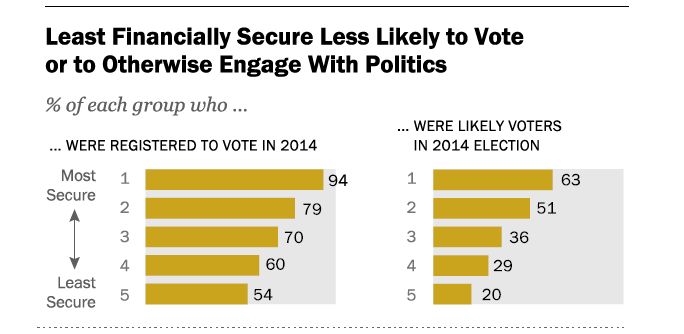
George Will doesn’t know anyone who is poor. Poverty rates in America by ethnicity: whites, 10 percent; blacks, 27 percent; Latinos, 24 percent. Republicans favor voter ID laws out of concern for voter fraud, which has been shown to be rare. Democrats, remembering an American history of voter exclusion by numerous categories and tactics, oppose voter ID laws out of concern for minority voter suppression. The economically poor, however, have had low voter turnout rates for decades and initial studies in this new era of voter ID laws do not show lower voter turnout rates among their ranks. But, it’s a plain fact that not everyone eligible to vote has a government-issued photo ID. Who are these? Generally, they are younger Americans, those not college educated, Latinos, and those living in poverty (regardless of ethnicity or age). It costs money to have access to a car and have an accompanying drivers license, to arm oneself with a handgun (its photo permit an acceptable form of identification in order to vote in Texas), or to have a passport (another form of ID acceptable for voting in most states with voter ID laws). Requiring a photo ID at an airport in order to fly? Yes, of course, that’s a necessity in the post-9/11 world. But, again, it costs money to fly. Generally speaking, people living in poverty don’t do a whole lot of cruising in cars to an airport, .22 pistol in the glove box, ready to hop on a flight – domestic or international.

And what about the requirement that visitors to the Justice Department have a photo ID to get in? Yes, of course, for the protection of all in the building, entry through a metal detector and the offering of a photo ID is a necessity (until iris-recognition biometric technology is perfected). And what percentage of Americans ever enter the DOJ headquarters in Washington, D.C.? Answer: an incrementally small percentage. The topic at hand is not access to a privilege – car or gun ownership, a seat on an airplane, or entrance to a tightly secured federal building. The topic is voting – according to the Constitution – “a right” conferred to all citizens. The right to vote is taken away from convicted felons, but living in poverty is not supposed to be an obstacle to the ballot. It’s easy enough for middle- and upper-class folks to comply with voter ID laws; the requirements of these new laws reflect middle- and upper-class lifestyles and values. The new voter ID laws were written by people who, like George Will, for the most part, don’t know anyone who is poor.

Getting voter eligible identification cards into the hands of those who don’t have a photo ID is a pragmatic solution. Of the 34 states putting the voter ID laws into practice, how many are allowing for a “grace period” (two years seems reasonable) so that the estimated 10-12 percent that don’t have drivers licenses can procure a government-issued ID in order to vote, complying with the new laws?

There’s no questioning that George Will is a brilliant scholar and commentator. His brilliance is tarnished, however, by something that plagues many well-to-do Americans: not having personal relationships with anyone living in poverty, their understanding of their poorer neighbors’ reality is jaundiced – often loaded with judgment and lacking of deeper insight and compassion.


My book, Just a Little Bit More: The Culture of Excess and the Fate of the Common Good, is available at http://www.blueocotillo.com and wherever books and ebooks are sold, including Amazon.

Bursting the Bubble of Excessive Economic Growth

Did you catch Boyhood? Watching Ellar Coltrane’s character, Mason, grow up is pretty cool – except when he gets his long locks trimmed at the insistence of an abusive step-dad. To simply see the physical growth and changes in Mason happen before your eyes (even at a lengthy two hours, forty-five minutes) is almost worth the price of admission. Toward the end of the movie, as Mason reaches young adulthood, we anticipate other changes in his person – not so much physical, but emotional and even spiritual.

A girl or a boy grows for 15-20 years and then reaches a state of physical maturity. In the adult years, physical growth ceases and the continued development of one’s character, spirit, and psyche prevails. Borrowing inspiration from the teacher of Ecclesiastes, there is a time for growth and a time to refrain from growth. In a finite world growth is necessarily limited. Development, defined as elaboration or maturation, deals with internal structuring and happens within the bounds of external physical limits. In my book, Just a Little Bit More, I critique the culture of excess that chooses the value of fast growth over slow and continued development much more often than not.

Economically, the long-term growth beginning at the dawn of the industrial era (early 1800s) and the short-term growth since the post-World War II era have significantly blessed millions of the world’s inhabitants, lifting them from poverty to prosperity. The ingenuity, sweat equity, and persistence of inventors, entrepreneurs, and millions of workers have made this beneficial economic growth possible. None of these, however, played the primary role as have the fossil fuels coal and oil, the cheap energy sources powering the geniuses and the grunts. As I stated in a previous post on this topic, gasoline boasts the energy equivalent of four hundred person hours of work. Yes, we’ll still have plenty of oil for some time and it will accomplish many things at the behest of human creators and doers. But, it is a non-renewable energy source and its externalities of pollution and carbon emission are unsustainable in a finite world. Beyond that, its ubiquity (and new lower price!) lures us into a false sense of security: we feel the economic growth we are so accustomed must continue on ad infinitum. For it not to continue as we’ve known it would be cultural and societal ruination, or so we think.

steady state 3

Other options do exist. A steady-state economy is one such option. It’s not socialism or Marxism or a forced recession, but economic sustainability. A steady-state economy at its core is an economy of stable resource usage and consumption. Enough is Enough by Rob Dietz and Dan O’Neill (Berrett & Koehler, 2013) is an excellent resource for understanding the issues of a steady-state economy. The 19th century is over; we can no longer operate with a mentality that assumes an endless frontier of untapped resources exists solely for our economic exploitation. Dietz and O’Neill claim that, in our current day, technological optimism – the belief in the power of technology to overcome limits to growth – gives us a false sense of separation from the environment. The economy and our way of life are not somehow unconnected from the natural world; we need to adopt an economy that suits the needs and limits of the planet. Sixteen percent of the world’s population – those living in developed nations – accounts for 78% of the world’s consumption expenditure, while 2.7 billion people, 40% of the world’s population, live on $2/day or less. If we think “economic growth” is going to lift a majority of these 40% out of grinding poverty, we’ll have to pick up a few more planets on eBay or Amazon, because this current one won’t be enough neither in terms of resources nor waste-holding capacity!

A stable population is a necessity for those who advocate a steady-state economy. World population: today, 7 billion / 2050 estimate, 9.3 billion. US population: today, 316 million / 2050 estimate, 400 million. The US population continues to increase even as the US fertility replacement rate is 1.8, below the rate of 2.1 needed for a developed nation to maintain its population. Because of immigration, US population continues to grow. Even so, conversation on the feasibility of a steady-state option is a necessity especially as world population continues to increase. Smart economic development and sustainability must increase and the acceptance of growth at all costs must decrease.

Did you catch President Obama taking credit for the recent economic growth in his 2015 State of the Union address? The very next day Senate majority leader Mitch McConnell was counteracting the president, claiming the credit for his own political party. While members of both parties childishly bicker as to the generation of economic growth, and blindly tout its merits (it helps them to get elected), the world and our place in it desperately need a leadership they are not offering. The truth is that our society is thoroughly wedded to economic growth as a way of life and being – and it’s creating an increasingly complex dilemma:

             We rely on economic growth to generate jobs, yet continuous economic growth undermines the very life-giving and life-supporting systems of the planet. What in the world are we going to do about it?


My book, Just a Little Bit More: The Culture of Excess and the Fate of the Common Good, is available at http://www.blueocotillo.com and wherever books and ebooks are sold, including Amazon.


Economic Growth: The Good, the Bad, and the Ugly

In this current day when congressional Republicans and Democrats don’t agree on much of anything, there is one thing that creates a rare kum bay ya moment of unity for the two groups: economic growth. Don’t get me wrong – healthy economic growth provides jobs, creates necessary goods, and keeps the majority of us fed, clothed, and sheltered. Healthy economic growth is a many-splendored thing! However, for reasons I will explain below, we tend to become fixated with economic growth to the point where we proclaim it our societal salvation: the elixir to ameliorate all social problems from unemployment to social program funding deficits. To the contrary, I propose that the unexamined pursuit of economic growth in a finite world only makes our problems worse and hinders us from seeking and implementing actual solutions.

Let’s cut to the chase. As the Depression eventually gave way to post-World War II, vibrant economic growth in America lifted many out of poverty and pretax incomes between the richest and poorest Americans narrowed. Economic growth (annual GDP) hummed along at 4% and 5% yearly rates.  The US government published the first national poverty rate – 22.4% – in 1959, a significant improvement over the poverty rate estimates of 40-60% during the Depression. One of the main factors contributing to this strong growth was cheap and plentiful oil. As US production of oil was not able to keep up with demand, reliance upon cheap and plentiful foreign oil increased in the 1960s. The OPEC oil embargo of 1973 changed all that. Economic growth decreased to 3% during the 1970s and ’80s, and for the fifteen years of the new century it has hovered around 2%. One of the main factors for the decrease of the growth rate is the increasing price of energy due to the difficult and costly process of extracting energy sources.

Have you ever heard of the term EROEI? It’s an acronym for energy returns on energy invested. Back in the days of Rockefeller and the early American oil boom, EROEI was 100:1, meaning the energy equivalent of one barrel of oil input produced one-hundred barrels output. The area surrounding Titusville, Pennsylvania attracted oil drillers in the 1860s because of the ubiquity of oil springs – little creeks of oil! Those were, as they say, the good old days. Today EROEI for oil is about 15:1. Extracting petroleum from the bottom of the North Atlantic, for example, can be classified as an engineering miracle – albeit an expensive and extremely complex one. As the Keystone XL pipeline continues to be a point of contention in US Congress and American society, check if the sites from which you source information actually report on the EROEI of the Canadian tar sands. I’ve yet to hear a mainstream news organization mention EROEI. Some of the tar sands have a ratio as low as 3:2. Joseph Tainter and Tad Patzek, in their excellent treatise on our current energy dilemma, Drilling Down (Springer, 2012), tell us that to power a complex modern society a net energy ratio of at least 5:1 is required. Yes, the completion and implementation of the pipeline will create jobs – but at what cost? I’ve not even mentioned the accompanying pollution and strains on water supplies that the production of these energy sources entails, and the additional release of carbon into the atmosphere upon their eventual consumption and use . . .

To complicate matters, the Saudis are flooding the market with – just like the good old days – cheap oil. As I write this post in January 2015, gasoline prices in America are hitting long-time lows as the price of oil crashes the $50/barrel barrier for the first time since 2005. And, on cue, economic growth is up. Some are hoping (reports come out at the end of January) for a 5% growth rate – just like the good old days – for the fourth quarter of 2014. Will it last? Has the American economy made its long-awaited comeback to 1950s’ era growth? We’d be foolish to expect a return to what used to be. Cheap, high quality energy – coal powering the industrial era before oil became dominant at the turn of the 20th century – provides strong economic growth and is the essential foundation of the highly advanced society of which we are accustomed. A gallon of gasoline has the energy equivalent of four hundred person hours of work. Giddy up and then some!

So, YES, economic growth is a good thing. BUT, the good and strong growth we’ve experienced has been based principally on a cheap energy source. The fossil fuels coal and petroleum, essentially millions of years of chemically stored sunlight, have made possible a 200-year run of high-phase energy gain. Social commentator Richard Hienberg says we’ve gotten accustomed to a “perpetual growth machine.” For those who think the next high-yield energy source – methane hydrate is currently being touted – will pick up the slack when fossil fuels run their inevitable course of completion, I ask: Is it not narcissistic and irresponsible to think we have to continue on the same trajectory of consumption we’ve been on for the past 200 years? Financial advisor and writer Paul Kedrosky wisely opines: “I want to believe in innovation and its possibilities, but I am more thoroughly convinced of entropy.” In other words, the unlimited growth machine can’t and won’t last forever.

Australian economist Clive Hamilton calls our commitment to unlimited growth above all other things a fetish, “an object worshipped for its magical powers.” Unlimited growth is known by another name: cancer. The defining characteristic of a cancer cell is its inability to self-regulate. Healthy cells follow an established cycle of division, multiplication, and then, inevitably, death. Cancer cells are interested in only one thing: unlimited growth. Similarly, over-commitment to economic growth makes us susceptible to bubbles – the 1990s’ dot.com and the 2000s’ housing bubbles being the most recent examples. Economic bubbles are like cancer cells – they don’t know when to stop and they damage the common good.

What I’d really like to hear from a politician – a president, no less – is talk about a steady state economy. In this day and age, an elected leader – Republican, Democrat, or independent – tempts political death if he or she were to speak common sense and encourage steady state economics. That’s why it’s left up to authors and bloggers like me to do it.

My next blog post will cover steady state economy. Until then –

T. Carlos Anderson

And, in case you’re wondering, the EROEI of wind and solar energies are 20:1 and 13:2, respectively.


My book, Just a Little Bit More: The Culture of Excess and the Fate of the Common Good, is available at http://www.blueocotillo.com and wherever books and ebooks are sold, including Amazon.


Sorry, I Don’t Know Anyone Who is Poor . . .

Do you have a friendship with anyone who is poor?

Since writing and continuing my work with Just a Little Bit More, I’ve had a lot of conversations with others in my own socio-economic status range – upper-middle – about those in our society who live in poverty. Currently, the US poverty rate is around 16%. (I’m aware that there are some who bicker about the rate – how it’s determined and calculated. I’m using the government poverty threshold rate – for 2014, income of $23,850 for a family of four – which helps lend consistency over a fifty-plus year period, going back to 1959 when the US government published the first national poverty rate – 22.4%.) A lot of folks in the upper classes talk about the poor in our society, but the majority of those who speak don’t know – not by acquaintance, and certainly not by friendship – anyone who is poor.

Author Bill Bishop tells us why this is so in his book The Big Sort: Why the Clustering of Like-Minded America Is Tearing Us Apart (Houghton Mifflin, 2008). He argues that even as America becomes more diverse in overall demographics, we increasingly live in neighborhoods – and socialize – with people who think, vote, and sort their values just like we do. Remember the days when a mechanic and a doctor could be next door neighbors? The America of yesteryear was segregated racially; the dominant segregation in today’s America is socio-economic and often political – reflecting, in part, the polarization that dominates our strained social interactions. Bishop claims only 25 % of American counties in the 1976 presidential election were deemed landslide (more than a 20 point margin of victory); in the 2004 presidential election over 50% of American counties were landslide.

Sorry, I don’t know anyone who is poor, but I certainly have an opinion about the poor.

So true. I’ve learned by listening to middle/upper-middle/upper class folks (white, mostly – all my Latino and African-American friends and acquaintances do know people who are poor) to know what they say about those living in poverty, because I’ve been asking this question consistently for a couple of years when conversing about social inequality: Do you know anyone who is poor? The answer typically breaks down into four opinions/viewpoints: 1) personal knowledge (or an anecdote heard) of a bona fide slacker who doesn’t work and sponges off the government; 2) the story (the one answering the question) of his/her rise from poverty back in the 1940s or ’50s (the implication being that social mobility is alive and well in America); 3) the claim that poor people lack discipline and are lazy – again, the implication being that social mobility is alive and well in America; and, 4) the reality that people living in poverty in the United States have it so much better off than poor people in other parts of the world.

Yes, there are bona fide adult slackers who sponge off the government – without question. It’s tempting to think, however, if you don’t know anyone who is poor – the law of generalization – that all people living in poverty consequently fit this same pattern. Those of us who know people living in poverty realize that such a generalization is nowhere close to the truth. A small minority of adults sponge off the government; consider that half of those living in poverty in the United States – some 22.5 million – are children or elderly. The United States has an abysmal 23.1% child poverty rate. According to a 2012 UNICEF report of the thirty-five richest countries in the world, the United States ranks 34th in childhood poverty. Thanks to Romania’s rate of 25.5%, we avoid the cellar in childhood poverty rankings.

As for social (or economic) mobility – work hard, save money and you’ll succeed by moving up – it works well for middle and upper class, educated Americans (with the usual caveats for ethnicity, gender, and sexual orientation). But that same rate of social mobility doesn’t apply to those who are born into poverty, especially among ethnic minorities. The former group – higher classed and educated – is privileged, systemically. Today it’s best to be born rich in America: it’s three times more likely as compared to a generation or two ago that your father’s income will determine your own income. Upward social mobility, overall, is not what it used to be in America.

And, yes, those who are poor in American have it much better off than those who are poor in Africa, India, Russia, and China. My mother tried to get me to eat my boiled asparagus by referencing the starving hordes in Africa (or was it China?), but it was largely unsuccessful. I had no idea or vision of what life was like in Africa. That type of comparison thinking was too abstract for my juvenile mind to process, especially when it was fully engaged in potential strategies to avoid the mushy asparagus that sullied my plate. Similarly, personal income differences within countries matter much more than income differences between countries.  Economic differences can and do serve to motivate the less fortunate to aspire to greater heights, and poor people living in America can count on a better social safety net than poor people, for example, in Belarus. But, prominent economic deprivation in relation to the rest of society is what can warp a young mind and spirit, because the differences are blatant, noticeable, and real. And if the opportunities to advance are few and far between, then many of the social variables affected by poverty (incarceration, teenage pregnancy, and school drop-out rates) are simply and sadly reinforced.

Do you know anyone – a friend or someone who is more than a passing acquaintance – who is living in poverty?

Linda Tirado is someone who has lived most of her adult years in poverty. Her book Hand to Mouth: Living in Bootstrap America (G. P. Putnam’s Sons, 2014) tells it like it is. She got lucky; a blog post of hers that described living in poverty went viral and she ended up with a book deal. As she rightly claims, it’s more like she hit the lottery than worked her way up via a vibrant economic mobility. Her book is a top-seller and she tells a tale that is compelling, insightful, and real for many Americans. There are those, of course, who attempt to dismiss her telling of the tale of living in poverty in today’s America as overdone and exaggerated. I’ve read her book and done my own bit of investigating. Whereas she can tend toward over-generalizing (I’m guilty of the same charge at times), how often does a minority or shunned voice get the stage? She liberally uses profanity, but her voice is genuine. She speaks for a number of Americans who are rarely heard.

From the last chapter in her book, “An Open Letter to Rich People,” Tirado states “I hope at this point you are feeling like maybe you hadn’t thought this whole [socio-economic] stratification thing through all the way. You guys don’t really ever talk to us and have no idea what our daily lives are like.” When we don’t know anyone in a certain people group, it’s easy to stereotype and even demonize them. The majority of people living in poverty are not undisciplined, lazy, or necessarily deserving of their current fate. How might we all work together to remake our society into one where egalitarianism is valued more so than the propagation of entrenched privilege for the most fortunate among us? Tirado asks would you “want to live in the nation you’ve created; if you were born tomorrow into the lower classes, would you be quite so sure that America is the land of opportunity?”

Some of us in the upper classes are effectively cocooned off from those who live in poverty. We don’t know personally anyone who is poor; our interaction with people living in poverty is limited to random interchanges of commerce that bring us together. We who are well-off purchase or receive services from the working poor whose jobs pay the minimum wage of $7.25/hour or slightly more. As if it’s a religion, we teach to our kids and grandkids the unifying belief: If you’re poor, you’ve done something to cause it to happen, and, consequently, you are at fault. When we trust this premise to be true every single time – without exceptions – we create a society with an intentional lack of compassion. What social critic R. H. Tawney described generations ago is still true today: “A society which reverences the attainment of riches as the supreme felicity will naturally be disposed to regard the poor as damned in the next world, if only to justify making their life a hell in this one.” (From his classic of 1926, Religion and the Rise of Capitalism.)

What would it be like if there was more interaction between the socio-economic classes, as equals on a person-to-person level? Take it from Tirado: “There are poor and working-class people everywhere, guys. You can just have a conversation with one, like a real human being. Give it a try. You’ll like it. We’re entertaining. We have to be; we’re stuck entertaining each other because cable is ridiculously expensive.”


This blog post and others on this website are representative of my views and writing in Just a Little Bit More: The Culture of Excess and the Fate of the Common Good, available at http://www.blueocotillo.com, Amazon, or any other bookselling venue.

Pick it up with Linda Tirado’s Hand to Mouth – highly recommended!