The Dresser Drawers of Fast Fashion

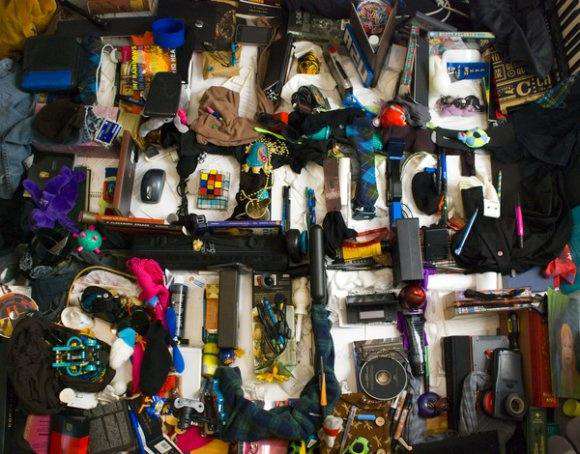
Do you ever have trouble closing your dresser drawers because of too many clothes? Perhaps the excess serves to remind you to sort through your clothes and bag some of them for Goodwill or Salvation Army.

Filmmaker Andrew Morgan says Americans consume and discard significantly more clothing items than two decades ago. Who knew? His new documentary on the clothing industry, The True Cost, explains yet another aspect of American overconsumption and its negative consequences realized in places of production like China, Bangladesh, and India. Prices for many clothing items have been trending down for the last two decades in great part because of China’s entry into apparel production. According to an article in the New York Times, US clothing and apparel expenditure in 1987 accounted for 5.4 percent of all personal consumption spending. By 2009, that figure was down to 3.1 percent. Even so, we (and others in different parts of the world) have purchased more clothes, because the prices are so cheap!!I-have-too-much-stuff
This is a good thing, right? Global economic competition means people in the developed world get more choices of garments and shoes at better prices and people in the underdeveloped world are able to work. This is the process that raises people out of poverty. Yes – it’s been going on for close to 300 years . . .

But it has to be done in the right way.  Although laborers had been abused long before the advent of the industrial era, labor abuse achieved systemic perfection during the era. Conditions in sweatshops have been exposed by countless writers from Upton Sinclair (The Jungle, 1906) to Naomi Klein (No Logo, 1999). The unseemly similarities between the 1911 Triangle Shirtwaist Factory fire in Manhattan killing 146 mostly immigrant garment workers and the 2013 Rana Plaza collapse in Dhaka, Bangladesh killing 1,129 garment workers and injuring over 2,500 are simultaneously tragic and shameful. We may have eliminated the drastic labor abuses in the American garment industry (and today only 3% of the clothes Americans purchase are manufactured in US factories, compared to 95% in 1960), but when we purchase and wear garments produced in questionable conditions overseas, we are complicit. Fierce global competition does lead to lower prices, but it also helps create abysmal working conditions for laborers.

Monsanto – the company that would slap a patent on Mother Nature if it could – sells its genetically modified (to guard against pests) and expensive cotton seeds to farmers in India. Most likely, you have some garments made from Indian cotton in your dresser drawers; India is the second largest producer and exporter of cotton in the world. Indian farmers currently (and historically) suffer from high rates of suicide. Monsanto (of course) denies that the high price of its seeds (manufactured in part with Indian companies) and associated farmer debt are linked to the recent rash of suicides. To be fair to Monsanto, there are other contributing factors to the suicides, such as alcoholism and personal domestic problems.

The Monsanto publicity department works hard on promoting an image of hard-driving multinational company stretching the bounds of science for the benefit of all humankind. But remember, Monsanto is the company that not only spies on, bullies, and sues its own customers, but it also owns the patent rights to “terminator gene” technology – the capability to make seeds sterile (and consequently force farmers to buy new seed every single planting season). They vow, however, not to use the technology . . . Right. Sounds kinda like Iran saying it won’t enrich uranium to weapons level grade. Which of the two do I trust less: Monsanto or Iran?

I have digressed – but it was purposeful digression. Remember the clothes we dropped off at Goodwill? Only ten percent of those items will end up on hangers inside the store for resale. The rest of it gets split into three areas: recycled rags and insulation, Sub-Saharan African resale markets, and landfills. The garment industry is the second most polluting in the world (behind the energy industry with its coal, oil, and gas), and globalization has made it possible to produce clothing at such low prices that many now consider clothing to be a disposable item – giving rise to the term fast fashion, akin to the term fast food.

Charlie_Chaplin_Machine
Charlie Chaplin in Modern Times (1936)

Theologian Paul Tillich, decades ago, accurately described the modern age we live in:

Man is supposed to be the master of the world and of himself. But actually he has become a part of the reality that he has created, an object among objects, a thing among things, a cog within a universal machine in which he must adapt himself to in order not to be smashed by it. (From Theology of Culture, Oxford University Press, 1959, 7-8.)

Fast fashion looks to be as unhealthy as fast food. Slow down, search for quality, make it last, reuse or remake it when possible, recycle, and – oh yeah – buy fewer items.


This blog and website are representative of the views expressed in my book Just a Little Bit More: The Culture of Excess and the Fate of the Common Good. JaLBM is available on Amazon as a paperback and an ebook. It’s also available on Nook and iBooks/iTunes, and at the website of Blue Ocotillo Publishing.

For book clubs, community of faith study groups, and individuals, the Summary Version and Study Guide of JaLBM is now available at the Blue Ocotillo website and on Amazon. It’s a “Reader’s Digest” version (only fifty-two pages) of the full-length original with discussion questions at the end of each chapter.

“Just a Little Bit More” Study Guide and Summary Version Now Available!

Quick link to Study Guide and book purchase page http://www.blueocotillo.com

jalbm svsg picThe fifty-two page summary version and study guide companion to Just a Little Bit More: The Culture of Excess and the Fate of the Common Good is now available! Ideally suited for book clubs and faith community education groups (high school to adult), the summary pamphlet is akin to a Reader’s Digest version of the full-length book with the addition of discussion questions at the end of all eight chapters. Now readers of both the book and the summary version can enter the same discussion on social and economic inequalities and consider together what can be done to uplift the common good.

From Dr. Craig Nessan of Wartburg Seminary and his review of JaLBM in the April 2015 edition of Currents in Theology and Mission:

How did we as a society arrive at our current state of extreme wealth disparity? T. Carlos Anderson, pastor of St. John’s/San Juan Lutheran Church in Austin, Texas, presents with measured judgment his findings based on extensive historical research and astute cultural analysis. Anderson proposes a return to the value of egalitarianism and practice of economic democracy as the way of deliverance from the regressive and even violent inequality under which we suffer. The reader is provided incredible detail and documentation of our current economic, cultural, and religious crisis. He expresses confidence that as in previous eras the pendulum finally shifted to correct the drive to economic excess through the mechanisms of political democracy, so our awakening to the present crisis can lead to an urgently needed corrective in our time.

From Dr. Phil Ruge-Jones of Texas Lutheran University:

Anderson’s book is an extensive chronicling of the people, movements, and streams of thought that have led us on the quest to want just a little bit more. In the role of a theologically aware social critic, he reminds me of Niebuhr. He is deeply embedded in the Christian tradition, but has listened carefully to many other voices and thus speaks a reasonable, balanced, and authoritative public word. Anderson shows us the way back toward a commitment to egalitarianism that has become lost over the last century.

From Rev. Kathy Haueisen, author of A Ready Hope and 40-Day Journey with Kathleen Norris:

A masterpiece . . . I highly recommend this book to anyone who wants to live in a world with a more equitable distribution of the world’s assets and resources. It ought to be required reading for every church leader.  

Thanks to the book clubs at First English Lutheran (Austin), Living Word Lutheran (Buda, TX), Triumphant Love Lutheran (Austin) and Holy Cross Lutheran (Houston) for reading and discussing JaLBM.

Thanks to Abiding Love Lutheran (Austin), St. John’s/San Juan Lutheran (Austin), and Chapelwood United Methodist (Houston) for doing adult education sessions with JaLBM.

Thanks to ELCA Campus Pastors And Staff (Regions 3, 4, and 5) for the invitation to present JaLBM and related themes at their 2015 Mid-Winter Retreat.

Other churches in Austin, Houston, San Antonio, and Chicago are planning to carry out study discussion groups of JaLBM in the fall of 2015.

For the month of June: Purchase book (regularly $14.95) and the Study Version/Study Guide (regularly $6.95) together for $16.00 (plus shipping and handling, and sales tax for Texas residents). Offer available only at the Blue Ocotillo Publishing website http://www.blueocotillo.com.

A few centuries ago a well-known Jewish rabbi offered this prayer to the Creator of all there is: Your will be done on earth as it is in heaven. What does the intersection of common good and God’s realm look like today? Put JaLBM on your summer reading list and prepare yourself to participate in or lead a study/discussion group with the purpose of seeking out answers to that important question.

Just a Little Bit More: The Culture of Excess and the Fate of the Common Good is available on Amazon as a paperback and an ebook. It’s also available on Nook and iBooks/iTunes.


The Annual Gates Letter and the Limits of Philanthropy

When we talk about Andrew Carnegie, the robber baron, we pronounce his name CAR-neg-ie. Yes, that was the guy who had his steel workers doing 12 hours days/7 days a week. When you hear his name spoken on NPR radio, however, it’s Car-NEG-ie. That’s the guy who founded and funded libraries, museums, and so much more. Carnegie – however you pronounce it – felt a moral obligation to give away his fortune for societal benefit. Ah, good ol’ philanthropy – a fantastic builder of common good, even if the utilized fortune was questionably attained.

John Rockefeller Sr. is the greatest philanthropist in the history of the world, not only because of the sheer volume of his giving (more than $1.5 billion during his and his son’s lifetimes – close to $20 billion in today’s dollars), but more so because he was the first mega-philanthropist wanting to get at the root causes of societal problems. As quoted by biographer Ron Chernow, Rockefeller explained his mature view of philanthropy: “Our guiding principle . . . to benefit as many people as possible. Instead of giving alms to beggars, if anything can be done to remove the causes which lead to the existence of beggars, then something deeper and broader and more worthwhile will have been accomplished” (Titan, Vintage, 1998, p. 314). The Rockefeller foundation has uplifted the common good by various accomplishments: eradicating hookworm in the southern US and in fifty-two countries across six continents, developing a vaccine for yellow fever and other diseases, supporting minority and higher education, establishing medical and social science research centers, among many others.

bill-melinda-gates-425ce
Melinda and Bill Gates at the World Economic Forum – Davos, Switzerland

Bill and Melinda Gates have followed in Rockefeller’s and Carnegie’s paths and readily share their enthusiasm for philanthropy’s continued upside. Bill and Melinda Gates, quite simply, are in Rockefeller’s category as philanthropists. They are committed to fighting inequity, and have joined with investor and philanthropist Warren Buffet to form the Giving Pledge, encouraging fellow super-wealthy to commit to give away more than half of their fortunes through philanthropy during their lifetimes or in their wills. Through their own foundation, established in 2000, the Gateses battle hunger, poverty, and disease and also uplift education. You might not know as much about Melinda as you do about her husband. A native of Dallas and 1982 valedictorian of Ursuline Catholic Academy, she has both an undergrad degree (in computer science) and an MBA from Duke University; she began to work for Microsoft in the late 1980s. After dating for six years, Melinda French and Bill Gates married in 1994. They have three children; she is a practicing Roman Catholic and has her husband’s support in raising their children in the Catholic expression of the Christian faith.

The Gates’ 2015 annual letter makes a bold claim: “The lives of people in poor countries will improve faster in the next 15 years than at any other time in history. And their lives will improve more than anyone else’s . . . These breakthroughs will be driven by innovation in technology — ranging from new vaccines and hardier crops to much cheaper smartphones and tablets — and by innovations that help deliver those things to more people.” Wow – that’s pretty ambitious. For the most part, I think they are right.

The long-running industrial era with its call to work and accompanying rewards has lifted so many from the grips of poverty (including, for those reading this blog, most of our own ancestors). And that process continues today in poor countries – look what’s happened in China and India in the last twenty-five years, and most recently in Tanzania, Rwanda, and Cambodia. The improvements that can be made in underdeveloped countries are astounding and are enhanced by today’s technological possibilities.

Have you heard of the term technological optimism? It refers to a type of thinking that expects the problems of the world – economic, social, political – to be solved, or at least, assuaged, by technological advances. Bill and Melinda Gates, unequivocally, are technological optimists.

For the large majority of us in developed countries, living with the benefits of industrialization, technological advances are less advantageous. Being able to watch a movie on one’s phone – an example of technological advance – is not a life-or-death issue. In the developed world, we more so deal with something called the energy-complexity spiral (see Joseph Tainter and Tad Patzek’s excellent book, Drilling Down, Springer, 2012). The availability of incredibly cheap energy (coal and oil) has made possible – literally, fueled – the industrialized development of society. As we try to solve problems in the advanced world (how to play a movie on a hand-held device, or how to make a new anti-cancer drug less nausea-producing) more energy, knowledge, and money are typically required. Remember when the thermostat in your living room had a simple on-off switch and a dial temperature control? Now your “climate control device” houses a mini-computer and you often need to consult the manual, or call a technician, in order to manipulate it. Part of the energy-complexity spiral is that problems and solutions tend to get more complicated (and costly) as time marches forward.

The Gates’ annual letter says we’ll need to figure a way “to develop energy sources that are cheaper, can deliver on demand, and emit zero carbon dioxide.” Agreed – but, unfortunately, we are a long way off. We’re still drilling and burning oil like never before and the waste sinks on this poor planet get more exhausted all the time. The temporary low price of oil – mid-2015 near a five-year low – doesn’t help the situation. At the very least, we need to utilize an additional tax on gasoline to restore a sense of value to this precious commodity.* And because we’ve not yet backed off of oil, we’re stalling on the technological advances that will help produce better energy sources for tomorrow.

The main problem with an economy-produced fortune, like Rockefeller’s or Gates’, is that it necessarily comes imbued with technological optimism. I’m a supporter of technological advance, but I’m also wary of its allure and promises. Skyping on my phone is cool, but face-to-face relationships that create trust are the foundation of a good democratic society. Drought-resistant seeds in Africa, more cell phones for the women of Bangladesh, and widespread vaccine coverage for children in Nigeria is good . . . but we can’t duplicate developed world devices, machines, and technologies for the rest of the world based on how much fossil fuel we currently use. It would be a carbon emissions melt-down and waste sink nightmare. Perhaps we could also have some major philanthropic support to fund studies and projects that look at steady state economies, inclusive of how to slow down American consumerism while considering the disparate state of standards of living around the globe. Is there a current technology to remind us that less can be more?

Philanthropy is good, but it’s not the highest good. If philanthropy is understood to be the highest good we can produce, it then becomes no more than a paternalism that perpetuates the status quo. Creating systems of economy that are thoroughly just – where people don’t get left behind or left out – is the highest good. Capitalism in the 21st century is very good, but it can be and it can do better. We are responsible for making it better for today and for tomorrow.

At the end of the Gates Foundation letter, Bill and Melinda make an invitation to readers to join the movement by becoming “world citizens.” I’ve joined. The end of the letter calls for the “expanding of compassion” among world citizens. Part of that expansion, ironically, is using less – a mindset which absolutely cuts into grain of today’s conventional wisdom that more is better. How to get more out of less – that’s not only efficient, but also compassionate.

* Proceeds of an additional energy tax could be used to fix crumbling American infrastructure and support development of better energy sources.


The views expressed in this blog are reflective of my work in the 2014 book, Just a Little Bit More: The Culture of Excess and the Fate of the Common Good.  

Click here to purchase Just a Little Bit More: The Culture of Excess and the Fate of the Common Good. Paperback, $14.95. You will be redirected to the Blue Ocotillo Publishing website.

Click here if you prefer to purchase JaLBM from Amazon. Ebook available on Amazon, iBooks, and Nook.

Click here for Summary Version and Study Guide from the Blue Ocotillo Publishing website, ideal for book clubs and community of faith study groups.

Open-Carry, (Big) Cars, and a Theology of Power

The Texas legislature is in session, and the consideration to legalize the open-carry of handguns is a top agenda item. Intriguingly, Texas is out of step with most of the nation when it comes to permitting open-carry of handguns. It is one of only six states that currently doesn’t permit it (open-carry of shot guns and rifles, long associated with hunting, is permissible in Texas). Open-carry means a weapon is visibly holstered to a waist belt or harnessed on a shoulder strap. Proponents consider the holstered gun of a law-abiding citizen a deterrent to potential criminals, who, in contrast, typically conceal their weapons. This part of the argument makes good sense; yet, there is one factor on this issue, rarely mentioned, that I’m concerned about in today’s environment of increasing economic and social inequality: the human propensity to misuse power.

I recently saw a Toyota truck commercial – linked here – that invited you, the potential buyer, to view the showcased truck as “your castle on wheels.” Let’s face it: some people drive as if they would be kings and queens in four-wheel machines with public highways their own personal fiefdoms. No sharing of space, get the hell outta my way, screw you if you think I’m letting you in, you’re not driving fast enough for me so I’m going to ride your ass until you move, etc., etc., etc. Do people treat others like this when jointly walking toward a similar destination? Hardly. Something happens – linked to human nature – when we get behind the wheel, enclose ourselves behind glass and steel, and rev the engine. Like Obadiah Stane as Iron Monger, we become supersized.

et.0423.sneaks.484 –– Obadiah Stane (Jeff Bridges) surveys the Iron Monger armor in the 2008 movie "Iron Man". Paramount Pictures and Marvel Entertainment Present A Marvel Studios Production. ***2008 SUMMER SNEAKS movie.
Jeff Bridges as Obadiah Stane in Iron Man

The twentieth century Christian theologian Reinhold Niebuhr (credited with writing the Serenity Prayer, used by twelve-step groups) wisely opined concerning human progress: “There is therefore progress in human history; but it is a progress of all human potencies, both for good and evil.” Our use of power in the last three centuries – for better and for worse – amazes. Incredible inventions and discoveries making human existence less brutish and more enjoyable; incredible inventions and discoveries able to kill grand quantities of humans (and other forms of life) within seconds. The more power we have, individually and collectively, the more so living life on this planet becomes complex. Religious traditions, from the Jewish commandment “Walk humbly with your God” to the Buddhist teaching “Respect all forms of life,” encourage us not to become supersized in our estimations of self.

The majority of drivers and gun owners are responsible in their respective actions. Yet, as our relationships become thinner and more homogenous in a society of increasing inequality, our fears of one another and our impatience with one another negatively impact our actions. Motor vehicle death per capita in America is down (thanks in part to airbags and safety regulations), but it remains the leading cause of death for Americans under thirty. Ninety Americans die in motor vehicle accidents – entirely preventable – every day. More than 30,000 Americans die yearly from gun violence; more than thirty a day die by homicide and more than fifty a day die by suicide. African-Americans John Crawford and (twelve-year-old) Tamir Rice were shot to death by white police officers, rigorously trained in gun use and safety, because they were thought to be “perpetrators.” As a result, violence directed toward police officers is unfortunately on the rise. The misuse of power in all directions can tragically lead to the loss of innocent life.

We yet live in a society where the fear of the other predominates; many whites fear blacks and browns. In response to fear, human nature dictates that we protect ourselves. With a twenty-year downward trend in violent crime and homicide in America, however, the move toward nationwide open-carry begs the question: Do we as a society and as individuals know the limits of physical power? Supersizing ourselves – with guns or cars – takes away energy and resources from something else potentially much more beneficial to a shared societal common good. What if we put supersized energy and time into the depth and scope of our relationships one with another – especially with those we don’t know? Rich and poor, whites and persons of color, young and old, civilians and police, conservatives and liberals – renewed relationships in public space are more powerful than we realize and help prevent our misuses of power.

niebuhr
Reinhold Niebuhr (1892-1971)


God, grant us the serenity to accept the things we cannot change, the courage to change the things we can, and the wisdom to know the difference.


The views expressed in this blog are reflective of my work in the 2014 book, Just a Little Bit More:
The Culture of Excess and the Fate of the Common Good.  

Click here to purchase Just a Little Bit More: The Culture of Excess and the Fate of the Common Good. Paperback, $14.95. You will be redirected to the Blue Ocotillo Publishing website.

Click here if you prefer to purchase JaLBM from Amazon. Ebook available on Amazon, iBooks, and Nook.

Click here for Summary Version and Study Guide from the Blue Ocotillo Publishing website, ideal for book clubs and community of faith study groups.

JaLBM Summary Version/Study Guide Now Available!

Brad Highum, a pastor at Abiding Love Lutheran Church in Austin, has been a great supporter of Just a Little Bit More from its very inception.* Back in 2011, we lunched over gyro wraps at the Phoenicia Bakery on South Lamar in Austin. We sat on the picnic table outside in the hot fall wind (Phoenicia, abundantly stocked with Greek and Arab staples, doesn’t have indoor seating) and went back and forth about the 2007-08 economic swoon and the related topics of social immobility, rising inequality, and childhood poverty. Brad’s enthusiasm let me know that my thinking was on the right track.

JaLBM came out in May 2014. My own congregation, St. John’s/San Juan, and Brad’s were the first congregations to participate in a book study of JaLBM. We conducted the studies concurrently with the purpose of compiling feedback and notes that would contribute toward a study guide for other faith communities.

Halfway through the study, one of Brad’s congregants walked into the Sunday morning adult forum at Abiding Love and gave Brad a knowing look. “Pastor Brad,” he offered, “this book is not a light read.”

Brad responded with a wink and a smile: “It’s not a light topic.”

Checking in at 110,000 words and covering the aforementioned topics related to social inequality, JaLBM is not a light-hearted summer beach read. (My brother Mike, however, did read JaLBM in three days at a Bible camp on Minnesota’s Lake Carlos – he is the current JaLBM speed-reading champ).

JaLBM Summary Version and Study Guide Now Available

For those of you waiting for an easier to read version of JaLBM, wait no longer. Just fifty pages and boasting a larger font, the 10,000 word JaLBM Summary Version and Study Guide condenses the full-length book into a Reader’s Digest version, with discussion questions at the end of each of the eight chapters.

A study of JaLBM with others in a church, synagogue, temple, men’s group, women’s group, or book club setting affords rewarding discussion. JaLBM encourages interchange on the big topics related to social inequality without participants having to fall into well-worn political ruts. Readers of the full-length version and the summary version of JaLBM can be on the same page when it comes to discussion and analysis of the work, leading to activity on behalf of the common good.

The summary version is also intended for high school and college student groups. It’s available now at the Blue Ocotillo Publishing website and soon on Amazon. Thanks to the good folks at Abiding Love and St. John’s for their work in helping to prepare the study guide questions.

Greg Pierce, publisher at ACTA Publications in Chicago, advised me last summer to produce a summary version of JaLBM. ACTA produces community organizing and theology books, with a number of these in pamphlet or summary form. ACTA distributes JaLBM nationally. Greg has had over thirty years experience in the publishing field. He told me that he has consistently seen priests and pastors – when visiting the book table at a convention or conference – overlook whole length books in favor of summary version pamphlets. Greg says it has something to do with their workload!

brother brad
Brother Brad Highum

No matter your work load, there’s a JaLBM version for you. I invite you to take a good look at it and enter into the ongoing discussion to combat social inequality and uplift the common good.


Click here to purchase Just a Little Bit More: The Culture of Excess and the Fate of the Common Good. Paperback, $14.95. You will be redirected to the Blue Ocotillo Publishing website.

Click here if you prefer to purchase JaLBM from Amazon. Ebook available on Amazon, iBooks, and Nook.

Click here for Summary Version and Study Guide from the Blue Ocotillo Publishing website.


*Brad’s colleague pastor at Abiding Love, Lynnae Sorensen, has been a steady supporter of JaLBM as well.


Can Science Replace Religion?

New Atheism – led by scientists Sam Harris and Richard Dawkins, and others – is deeply critical of religious teaching and practice. Harris says in support of his book The Moral Landscape (Free Press, 2011), “Religious ideas about good and evil tend to focus on how to achieve well-being in the next life, and this makes them terrible guides to securing it in this one.” He and others posit science as a better way to determine worthy human morals and values.

Harris is right to criticize religious understandings that place oversized emphases on an afterlife at the expense of present day concerns – consider the 9/11 terrorists and the supposed promise of virgins awaiting them in paradise, a tragic blend of hate and misogyny inspiring them to act in this world. Harris is also right to look to science to determine better ways for humans to know, think, and interact – making the world a better place now and in the future.

But, before we get too excited about its promoted versatility: science will never solve all of our problems. The human family yet needs good religion. Getting rid of religion, as advocated by Harris and Dawkins, would be akin to throwing out the baby with the bathwater. Additionally, it increases the risk of making science something it is not – a religion.

Consider, for example, forgiveness. Science can teach us about the benefits of forgiveness, but it can’t teach us how to put it into practice. That’s what religion does. Furthermore, religion and science working together help define and categorize different types of forgiveness, a mutual enhancement that makes the world a better place. People who practice forgiveness tend to have lower blood pressure, live with less stress and anxiety, and understand thou shalt not kill as a good guide to navigate relationships with other human beings in this present world. Forgiveness incorporated rejects the option of vengeance. All of these are enhancements to the health and well-being of the whole human family.

The word religion, from the Latin religio, means to fasten, bind, or reconnect. There is no question that religions are human constructions, and consequently not perfect. For Jews, Christians, and Muslims, forgiveness is central to their religious understandings for life in this world. Forgiveness – ritualistically part of all three systems – reconnects adherents with the Divine and binds adherents to one another in this life. Human beings created religions, in part, to help forge community ties. Forgiveness enhances and binds those relational ties, from birth to death.

The story of Joseph, son of Jacob, is shared by the three monotheistic religions. Dreamer of stars and moons, Joseph, the younger offspring and favorite of his father, is sold into slavery by his jealous and envious older brothers. Only later, when the brothers and their families are suffering from hunger and famine, do they unknowingly face their long lost brother Joseph. They are in a most desperate situation, physically and emotionally. Joseph, now powerful and holding in his hands the fate of his brothers and “their little ones,” has the option to choose vengeance upon his brothers for having sold him into slavery so many years earlier. He instead chooses forgiveness – and family reunion.

Of course, religion has been misused through the ages. It has caused great and painful suffering, even to our present day. But it has also taught humans to love one another, to accept one another, and to forgive one another. Religion, like anything else worthy of human attention and endeavor, needs to be continually reformed in order to be better. The old story of Joseph and his brothers has the unique ability to instruct and reform the current and future human family; forgiveness is an essential element for the very survival of humanity.

British writer Bryan Appleyard critiques thinkers who endow science with the ability to give a “final and full account of the world.” Harris and Dawkins have legitimate critiques of religion and some of its practices, but ultimately they advocate science as the one and only true way – essentially, a new religion. This type of thinking is categorically fundamentalist – a type of thinking that usually is not beneficial to the health and well-being of the human family. Atheism is a belief system just as much as any religion can be. True wisdom understands the world to be a big place, large enough for the scientific theories that explain the essence of stars and moons and large enough for the religious systems that bind us together as people who practice virtues like forgiveness.


These blog posts are representative of my work in Just a Little Bit More: The Culture of Excess and the Fate of the Common Good. The book is available through the website of Blue Ocotillo Publishing, www.blueocotillo.com, and Amazon. Blue Ocotillo Publishing – paperback – $14.95 + tax (for Texas residents) + shipping. Ebook format available on Amazon, iBooks, and Nook.

“Just a Little Bit More” Gets Airborne

bish and jim
Bishop Mike Rinehart and Jim Sorensen*

An unexpected thing happened last May on a plane bound for Addis Ababa, Ethiopia. A group of ten adults was travelling to the historic East African country to work with the organization Water to Thrive. W2T is a faith-based non-profit dedicated to fighting one part of the global water crisis by bringing clean, safe well-water to those who need it in rural Africa. Jim Sorensen, a former missionary in Ethiopia and a W2T board member, went on the trip to serve as an experienced guide for the group. Mike Rinehart, bishop of the Gulf Coast Synod (ELCA), was a first-time participant wanting to learn more about W2T’s work in order to inspire greater support for W2T’s mission upon his return to the Houston area.

Mr. Sorensen and the good bishop were seated near each other on the Boeing 777, and as they settled in for the fifteen hour trip, both reached in their carry-on bags and produced – did you guess? – brand new copies of Just a Little Bit More. They exchanged glances of surprise; this was more than mere coincidence. They had independently received a copy of the new book, and unbeknownst one to the other, had the same reading plan for the long flight over the Atlantic and the mid-section of the African continent. In just its second week of publication, JaLBM was making its way to Africa with two travelers committed to fighting the debilitating effects of lingering poverty.

It took me the better part of three years to write and publish Just a Little Bit More. As a matter of fact, I picked up the first one hundred copies fresh off the digital presses of my printer in Austin (Ultimate Imaging) on Friday, May 2, 2014. The Southwestern Texas Synod Assembly (ELCA) convened in Austin the very next day, and Bishop Ray Tiemann was kind enough to announce to the gathered group that my awaited book was available. A number of colleagues and assembly attendees purchased copies. The next weekend the Gulf Coast Synod would gather in Baton Rouge for their assembly meeting. Good friend and Lutheran Foundation of the Southwest rep David Johnson attended the assembly and delivered a promised copy of JaLBM to Bishop Rinehart. Mike promised me he’d give JaLBM a read and tell others about the book through his website. That same weekend back in Austin, good friends Paul and Marsha Collinson-Streng hosted a book signing party. A number of other good friends came to share in the festivities; we ate, drank, visited, and listened to a reading. Pastor Lynnae Sorensen was at the party; she had originally purchased a copy at the Austin synod assembly meeting, but wanted one more “for my dad who is travelling to Ethiopia on Sunday.”

Jim Sorensen finished reading JaLBM before the group got back to the States – less than two weeks. Jim says that JaLBM is “a great book; like a lesson on what creates poverty, and how we end up perpetuating poverty! A must-read for all Christians who care.”

Bishop Mike put up a review of JaLBM last August on his blog. “Just a Little Bit More engages in a critique of the god of mammon, lamenting that the concept of the common good, so central to American history, has fallen out of favor. T. Carlos Anderson believes liberty and egalitarianism need not fight with one another. They can coexist in such a way that all can have enough.”

Both Jim and Bishop Mike get gold stars – as do a few hundred others – for reading the smaller font first edition of JaLBM. With a larger font, the second edition of JaLBM came out in October 2014 coinciding with the release of the ebook version. Close to 750 copies of JaLBM have been sold and distributed in its first year of availability. A big thanks goes out to people like Jim and Bishop Mike who have given their support to the book and its author! The purpose of the book’s publication and dissemination is to spur conversation and action that uplifts the common good in our midst, and in places throughout the world, like Africa.

The summary version/study guide of JaLBM is now available. At fifty pages with probing discussion questions at the end of each eight chapters, it’s the perfect accompaniment to the full length version to facilitate conversation and exchange in group study settings. Seeking common good and kingdom connection is the JaLBM motto, as seen in the good work of a great organization like W2T!


*Picture of Mike and Jim taken at 2015 Lutheran Legislative Event in Austin.

ELCA stands for Evangelical Lutheran Church in America, a national church organization of 4 million people and 10,000 community congregations.

Please visit the Water To Thrive website to learn more about the organization and how you can participate in its work.


Click here to purchase Just a Little Bit More: The Culture of Excess and the Fate of the Common Good. Paperback, $14.95. The summary version is available for $7.95. You will be redirected to the Blue Ocotillo Publishing website.

Click here if you prefer to purchase full length paperback from Amazon. Ebook available on Amazon, iBooks, and Nook.

Monday Matters Book Club Studies “Just a Little Bit More”

The Monday Matters book club, based at Triumphant Love Lutheran Church in Austin, Texas, has been gathering for discussion and shared insight more than twenty years. The group originally met in the house of Ted and Velma Ziehe; the first book studied was Marcus Borg’s Meeting Jesus Again for the First Time, its debut conveniently coinciding with the group’s formation in 1994. The initial group, consisting of Lutherans, Presbyterians, and Baptists, liked Borg’s depth of critical scholarship within a faith perspective. Borg’s journey from a naïve, unquestioning faith to one of maturity and authenticity was a positive struggle shared by many in the group. The group decided to keep meeting. The lure of Velma’s cookies and the conversation promised by the study of other good books guaranteed the group’s viability for many more years.

Five years ago, the group started to meet at Triumphant Love. Engineers, pastors, teachers, nurses, and entrepreneurs comprise the group. While neither diverse ethnically nor socioeconomically, the group colors the political map blue, red, and purple. It’s good for Democrats, Republicans and independents to be in conversation with one another in a religious setting: all are reminded that theology is to inform politics, and not the other way around. We might not see eye to eye politically, but we can be in conversation with one another on how best to love and serve our neighbor in God’s name – together.

monday matters
Monday Matters book club – Triumphant Love Lutheran, Austin, TX

Thanks to Norb Firnhaber and Leroy Haverlah who suggested that the group study Just a Little Bit More. Group convener Doug Nelson graciously told me more about the group and helped distribute copies of JaLBM. I introduced JaLBM themes to the group on February 16 – including the dominant religion in America as represented by the Caddy Man (you need to get to know him if you don’t already) – and they took it from there. They convened five sessions to discuss chapters one through eight and invited me back for a closing session on April 6. It was good to meet new folks and see others that I already knew – Ralph and Ellie Erchinger, Dorothy Kraemer, Jim and Kris Carlson – and to be in meaningful conversation with them. Doug Nelson says JaLBM brought out “the most vibrant discussions” the group has had for some time.

If you have a group at church, synagogue, or temple that appreciates meaningful discussion on the important social and economic issues of the day – without falling into well-worn blue and red ruts – take on a study of JaLBM. The book challenges readers with a perspective that cuts against the grain of today’s accepted conventional wisdom of money as highest good. As Peter Steinke says in the book’s foreword, JaLBM benefits its readers by showing “how we have shaped the system we are a part of and what can lead to a new way of doing economics that embraces the common good.”

The summary version of JaLBM with study guide questions is now available at the Blue Ocotillo Publishing website. The study guide version summarizes JaLBM‘s eight chapters and poses questions for discussion at the end of each chapter. Whether reading the full length book or the summary version, all present in a group setting can enter into meaningful discussion and conversation, just like the Monday Matters group at Triumphant Love did for seven sessions.

For those groups in Austin and its vicinity, I am available for presentations to lead JaLBM discussions on the topics of egalitarianism, social mobility, economic democracy, and common good – all from a faith perspective. I’m confident the discussions will be worthwhile and influential.

———————————————————————————————————–
“Anderson’s book is an extensive chronicling of the people, movements, and streams of thought that have led us on the quest to want just a little bit more. In the role of a theologically aware social critic, he reminds me of Niebuhr. He is deeply embedded in the Christian tradition, but has listened carefully to many other voices and thus speaks a reasonable, balanced, and authoritative public word. Anderson shows us the way back toward a commitment to egalitarianism that has become lost over the last century.”
Dr. Phil Ruge-Jones, Professor of Theology and Philosophy, Texas Lutheran University


Just a Little Bit More is available through the website of Blue Ocotillo Publishing, www.blueocotillo.com, and Amazon. Blue Ocotillo Publishing – paperback – $14.95 + tax (for Texas residents) + shipping. Ebook format available on Amazon, iBooks, and Nook. JaLBM Summary Version and Study Guide is available at the Blue Ocotillo Publishing website.


Deja Vu – Say It Ain’t True – Another Subprime Loan Debacle Emerging

Who can forget the 2007-08 economic swoon brought on, in great part, by greed and over-extension in the subprime housing loan industry? File the following under the We Haven’t Learned a Blame Thing from Recent History category: it looks like the same exact thing is happening in the subprime auto loan industry.

You might have heard that 2014 was a good year for the US auto industry – its best year since 2006. Lower gasoline prices have certainly helped sales, but the industry push to get people with poor credit into cars is the main driver. (Sorry, I couldn’t resist). You’ve heard, haven’t you? No credit, bad credit, any credit – you won’t be turned away!

bad creditOne-fourth of all car loans – new and used – now go to folks with poor credit ratings, double the rate since 2010. The duration of loans is at an all-time high mark of 5.5 years, with 7 and 8 year loans now available. Really? Eight years? Some people will be doling out payments on a car they will no longer possess or that will no longer run. On top of this, wages of most of those taking subprime car loans are flat. And on top of that, Wall Street has been securitizing these loans at record levels in the last two years. Predictably on cue, the delinquency rate on subprime loans is rising as the auto repossession rate soars. Sounds familiar, doesn’t it?
There is nothing wrong with people who have poor credit getting into houses and cars. Credit is a powerful tool for social and economic mobility. All who have “made it” have been the recipients of blessed financial credit many times over. (No one can justly claim to be “self-made” – to do so is to play the part of Pinocchio.) There are people who rightfully deserve a poor credit rating, reflective of bad decision making. But there are many who have poor credit ratings due to uncontrollable and difficult life circumstances. Sometimes people need a helping hand. Having a house to live in can be a significant stabilizing factor in the life of a family – much more so than having to move from apartment to apartment chasing affordable rent payments. Having a car for transportation is a near-necessity in much of the American job market.

There is something wrong with large banks – no longer enjoying the hyper-growth and ill profits from the pre-2008 housing market – looking for similar type gains from the subprime car loan market of today. During the housing market fiasco, lenders encouraged loan applicants to fudge their stated income upward in order to facilitate closings. Concerns abound that the same type of lax administration is fueling the subprime car loan boom.

The underpaid American lower economic classes need transportation to go to work, buy groceries, and take their kids to the doctor. Easy targets for the subprime loan industry, they are vulnerable to being pushed into overpriced vehicles via loans that are predatory. Ah, the new American way for lenders: make big bucks by stuffing folks from low-income communities into cars they can only afford by being put on the hook with insupportable debt.*

In a society of rampant consumerism – what’s not to like? People who need cars get cars and lenders and investors rake in cash. Forgive my decidedly old-fashioned sentiments: Is there anyone in the lending community with a conscience yet intact?

Wells-Fargo, one of the principal subprime car loan leaders, is showing such signs of moral sense. As of March 1, Wells-Fargo is capping its subprime loans to a ten percent ceiling of all its car loans. This is significant; Wells-Fargo is announcing to its banking competitors that it has learned something from the 2007-08 swoon. Whether or not its competitors follow Wells-Fargo’s lead remains to be seen.

Fortunately, the subprime auto loan industry is only one-fiftieth the size of the pre-2008 subprime housing market. All the same, let’s hope a hard-earned lesson from the 2007-08 economic swoon is not forgotten: the uninhibited pursuit of wealth and gain oftentimes is a moral hazard that damages societal common good.


This blog post is representative of my work in Just a Little Bit More: The Culture of Excess and the Fate of the Common Good. The book is available through the website of Blue Ocotillo Publishing, www.blueocotillo.com, and Amazon. Blue Ocotillo Publishing – paperback – $14.95 + tax (for Texas residents) + shipping. Ebook format available on Amazon, iBooks, and Nook.

*Bruce Cockburn, They Call It Democracy (1986).

Winthrop Rockefeller’s Steak

Two free-spirits ramble into a New York City restaurant bar looking for a drink. It’s late afternoon and the bar is darkly lit; even though the year is 1972, the décor and ambiance of the establishment is Mad Men to the core. The two young men order drinks at the bar. Hippies by appearance and mindset, they plan to get something cheap to eat – elsewhere – after soaking in their drinks.

Behind them, seated at a table, an older establishment type enjoys a steak dinner. Alone, impeccably dressed in suit and tie, handsome and self-assured, he slowly savors his meal while reading a newspaper. His presence in the near empty restaurant is unmistakably fitting; like a lion on the savannah, he has no competitors. Eventually, he pushes his half-finished meal aside and sits back farther in his chair and continues to read. The considerable remaining steak calls the attention of the two hungry hippies at the bar.

“Excuse me, are you going to finish that steak?” The question is almost as out of place as is the presence of the two hippies in a downtown Manhattan joint in the days of Nixon and Vietnam.

“Actually, no. You can have it if you let me ask you a few questions.” An agreeable bargain, the two hippies join the distinguished middle-aged gentleman at his table. Animated and engaging, the ensuing conversation flows back and forth. The gentleman learns that the young men have been living on a utopian commune in northern California. He wants to know if idealism is truly flourishing among the young these days. And what is the whole back-to-the-land movement about? The two hippies have just as many questions for their inviter as he has for them. They have a sense that the world is going off-track, through pollution, over-consumption and intolerance, and they want to know if someone from the older generation shares their views. More food and some delicious Cabernet is ordered by the lion for his new tablemates and the conversation goes on for an hour or so, longer than either party anticipated. The vaunted generation gap itself seems to vanish before their eyes in the soothing darkness of the bar. Two distinct worlds and mindsets – hippie and establishment – meet and commingle. Questions beget insight, and the two previously distinct worlds are understood, if momentarily, to inhabit shared space. The three men shake hands, and bid adieu; the law of homeostasis – all things return to their natural state – reasserts itself. But a lasting impression is made, and a bond is fashioned as American as Rockefeller and 1960s-’70s era hippies.

rock winthrop
Winthrop Rockefeller
dileo hippie
Michael DiLeo


On their way out of the bar, one of the hippies asks the bartender, Who was that masked man? Oh, that’s Winthrop Rockefeller, the bartender answers. The Governor of Arkansas. Grandson of the original titan, John D. Rockefeller.

———————————————————————————-

Good friend, author, and native New Yorker Michael DiLeo was one of the protagonists on the other side of the table in this story. He related his story to me a few years back when I told him I was researching the Rockefeller family for a book I was working on. I appreciate Michael letting me share his story and its encouragement to have a conversation with “the other.”

Winthrop Rockefeller was a native New Yorker, but developed a fondness for Arkansas during a trip there in the 1950s. By 1966, he was elected the first Republican governor of Arkansas since Reconstruction. World War II veteran and Purple Heart recipient, philanthropist, and rancher, Winthrop Rockefeller served two terms (2 years each) as Arkansas governor. Later, his son, Win Paul Rockefeller, would serve as Arkansas’ lieutenant governor. Winthrop Rockefeller was diagnosed with pancreatic cancer shortly after the impromptu meeting with the two hippies in Manhattan. He died in 1973 at sixty years of age.

My book, Just a Little Bit More: The Culture of Excess and the Fate of the Common Good, tells the story of the interplay of two great American traditions: egalitarianism and liberty. The story starts with the titan himself, Winthrop’s famous grandfather, who was the greatest philanthropist the world has ever known. American liberty allowed him to become the world’s first billionaire. Rockefeller’s business acumen was unmatched in his day; his ruthlessness, however, was certain and unquestionably damaging to competitors and innocents within his vicinity. John D. Rockefeller’s legacy is mostly good but it is also complex: his incredible wealth gave American society the permission to leave behind its egalitarian foundations. American egalitarianism, properly understood, is not an equality of material goods or wealth, but the opportunity for the weaker members of society to join forces in order to stand up to or have equal footing with society’s more powerful members. “No taxation without representation” – that’s liberty and egalitarianism working together. America has seen its best days when liberty and egalitarianism balance each other’s excesses – the pendulum does swing in both directions – and America’s darker days have occurred when the two traditions are out of sync or unbalanced.

I argue in JaLBM that since 1980, American society has been out of sync because of the domination of liberty. Today, many Americans don’t know what the word egalitarianism means because its use has diminished significantly in the last decades. American society, since 1980, has become increasingly isolated. The rich live and consort with fellow rich, and don’t know anyone who is poor. As an example, Mitt Romney’s “47 percent” gaffe during the 2012 presidential campaign is entirely indicative of the age.

John D. Rockefeller had humble beginnings. But even as he became Rockefeller, he continued to consort with rich and poor alike. Winthrop was like his grandfather in this sense – he actually consorted with others, including a couple of hippies of the early ’70s. He shared a table and genuine conversation, replete with curiosity. He didn’t have all the answers, and consequently was interested in talking to two fellow citizens with whom he had differences in lifestyle and opinion. Even so, conversation and exchange happened – akin to the interplay of liberty and egalitarianism. Two different entities working together can do much more than one alone.

Winthrop Rockefeller was a “good government” Republican who didn’t eschew a compassionate side to his politics. As Arkansas governor, he facilitated prison reform and oversaw the racial integration of the state’s public schools. His last act as governor was to commute the death sentences of Arkansas’ death row inmates to life imprisonment.

What would it be like if Fox News and MSNBC didn’t play into well-worn stereotypes and spent less time on accusations of the “other side”? I suppose ratings would plummet and we’d actually have to talk to one another to hear and understand each others’ opinions and viewpoints.

“You may say I’m a dreamer, but I’m not the only one.”

– John Lennon, Imagine (1971)


Just a Little Bit More is available through the website of Blue Ocotillo Publishing, www.blueocotillo.com, and Amazon. Blue Ocotillo Publishing – paperback – $14.95 + tax (for Texas residents) + shipping. Ebook format available on Amazon, iBooks, and Nook.